


 As the temperature drops, many people start to notice changes in their feet, cold toes, dry skin, and in some cases, painful red or purple swellings that seem to appear out of nowhere. If you’ve ever experienced this, you may have had chilblains (perniosis).
Cold weather doesn’t just make your feet uncomfortable, it can significantly affect circulation, skin integrity, and overall foot health. For people who already have underlying conditions such as poor circulation, diabetes, or prolonged exposure to cold environments, the risks are even higher.
The good news is that chilblains and other cold-related foot issues are largely preventable with the right knowledge and care.
We’ll explain how cold weather affects your feet, how to recognise early signs of chilblains, and most importantly, what you can do to keep your feet warm, healthy, and pain-free throughout winter. We’ll also guide you on when to seek professional advice from your local podiatrist to ensure any concerns are managed early and effectively.
When exposed to cold temperatures, the body prioritises keeping vital organs warm. This causes vasoconstriction, a narrowing of blood vessels in the extremities like your toes (Fan et al., 2023).
Reduced blood flow can lead to:
- Cold, pale or numb toes
- Increased stiffness in joints
- Dry, cracked skin
- Heightened sensitivity or pain
If the skin is repeatedly exposed to cold but not freezing temperatures and then rapidly rewarmed, this can trigger an inflammation response in small blood vessels. This reaction can leads to chilblains (perniosis) (Nyssen et al., 2020).
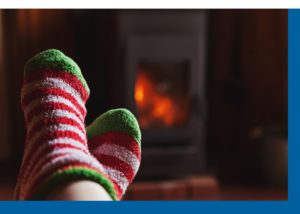
Chilblains also known as pernosis is a localised inflammatory disorder affecting small blood vessels in the skin (Kapnia et al., 2022). They commonly occur on the toes, fingers, heels, and ears.
They are not caused by freezing temperatures, but rather repeated and prolonged exposure to cold and damp conditions (Kapnia et al., 2022). The exact etiology is unclear, but vasospasm seems to play a significant role in this abnormal reaction the cold temperatures (Nyssen et al., 2020).
Chilblains can affect all ages, but they are most commonly seen in young to middle-aged adults, with a higher prevalence in women (McCleskey et al., 2021). Individuals who are frequently exposure to cold, damp environments, particularly those working outdoors or in occupations involving regular contact with water, are at greater risk (Kapnia et al., 2022).
Certain lifestyle and health factors can also play a significant role at increasing susceptibility. These include smoking/vaping, low body weight and poor nutrition, all which can negatively impact circulation, especially to your feet (Kapnia et al., 2022; Nyssen et al., 2020). Additionally, people with underlying medical conditions that also affect blood flow such as Raynaud’s phenomenon, SARS-CoV-2, Connective tissue disorders (e.g. Lupus, EDS), Cardiovascular disease or Diabetes may be more prone to developing chilblains (Fan et al., 2023; Kapnia et al., 2022).
Other contributing factors include a family history of chilblains and participation in winter sporting activities such as netball, AFL, football, golf, hiking and skiing, especially when living in cool climates (Fan et al., 2023). Chilblains are most commonly seen during late winter and early spring when temperatures fluctuate and damp conditions persist (Whitman & Crane, 2026).
Chilblains typically develop several hours after exposure to cold, damp conditions and most commonly affect toes and fingers, although they can also appear on other exposed areas such as the ears or nose in certain situations (reference). The symptoms can last for more than 24 hours and in some cases, may persist for a few weeks before fully resolving (reference).
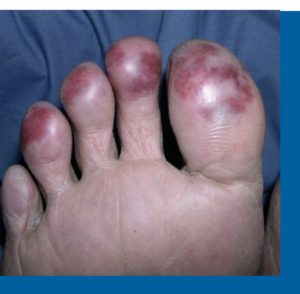 Common signs and symptoms include;
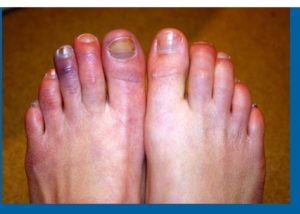
- Red, purple or bluish skin discolouration (often patchy and localised)
- Itching, burning or stinging sensation
- Painful or tenderness in the affected area
- Swelling of the skin
- Cold, sensitive or numbness to the toes.
In some cases, chilblains may become more severe and lead to;
- Blistering of skin
- Ulceration or skin breakdown
- Increased risk of infection if the skin is damage.
While the Chilblains are usually a self-limiting condition, early recognition of these signs and symptoms is important to preventing worsening and unnecessary discomfort (Whitman & Crane, 2026).
It’s important to seek professional advice if you notice any of the following:
- Symptoms that persist longer than 2–3 weeks or keep returning each winter
- Severe pain or swelling affecting your ability to walk or wear shoes
- Blistering, open wounds, or signs of infection (e.g. redness spreading, warmth, discharge)
- You have an underlying condition such as diabetes, poor circulation, or Raynaud’s phenomenon
- You are unsure whether the condition is chilblains or something else
A podiatrist can help confirm the diagnosis, provide individualised care and appropriate treatment, and guide you on evidence-based prevention strategies to reduce recurrence and help you get back to walking pain-free.
Prevention is the most effective approach to managing chilblains. The condition is strongly associated with repeated exposure to cold, damp environments and impaired peripheral circulation, meaning that protecting your feet and supporting blood flow are key strategies in reducing the presences and/or recurrence of chilblains (Fan et al., 2023; Souwer et al., 2016).
1. Keep your feet warm (laying matters)
Maintaining consistent warmth is essential to preventing vasoconstriction response triggered by cold / damp exposure.
To support foot warm:
- Wear thermal or wool-based socks, which provide better insulation and moisture control.
- Avoid cotton socks in prolonged cold exposure, as they retain moisture and increase heat loss.
- Change sock promptly of they become damp.
2. Avoid Rapid temperature changes
Sudden re-warming of cold extremities is a recognised trigger for vascular dysfunction and chilblains. Rapid temperature shifts may contribute to endothelial stress and inflammatory changes in the small blood vessels (Nyssen et al., 2020). Gradual rewarming supports safer vascular recovery and reduces the likelihood of inflammatory flare-ups.
To reduce risk
- Avoid placing cold feet directly onto heaters, heat bag, hot water bottles or hot water
- Rewarming feet gradually using ambient temperature or layered insulation.
3. Stay Active
Physical activity plays an important role in maintaining peripheral circulation. Reduced blood flow to acral regions is a key mechanism in chilblain development and movement helps counteracts this by stimulating vascular perfusion (Nyssen et al., 2020).
Helpful strategies include:
- Regular walking throughout the day
- Avoid prolonged periods of sitting or standing
- Incorporate general physical activity where possible (resistance training, hydrotherapy, indoor sports)
 Even smallest increase in frequent physical activity can help improve microcirculation and reduce the risk of prolonged vascular stasis and chilblains in the feet.
4. Protect your skin barrier
Cold weather reduces the skin barrier function, increasing risk of irritation, dryness, cracking and secondary complications. Maintaining skin integrity is important, particularly in individuals predisposed to chilblains. Healthy skin acts as a protective barrier, reducing the risk of breakdown if inflammation occurs.
Recommendations to help improve your skin-barrier:
- Daily use of a moisturiser to maintain skin hydration and improve skin elasticity.
- Paying particular attention to the heels and toes, where skin breakdown is more common.
- Avoiding heavily perfumed or irritating products that may disrupt skin integrity.
5. Improve circulation
Improve peripheral circulation is a key predisposing factor in chilblain prevention and management, with vascular constriction playing a central role in symptom development (Cappel & Wetter, 2014; Fan et al., 2023). Optimising circulation aims to help reduce susceptibility to cold-induced vascular response.
To support circulation:
- Avoid / cease smoking or vaping, which are associated with reduced peripheral blood flow.
- Maintain adequate hydration, supporting overall vascular function.
- Consider compression socks if clinically appropriate, particularly for individuals with venous insufficiency or prolonged standing occupations.
6. Choose the Right Footwear.
Appropriate footwear plays a critical role in regulating temperature, protecting against environmental elements (e.g. temperature and moisture), and maintaining skin integrity. Evidence supports the use of appropriate footwear and the importance of footwear when addressing environmental protection in preventing cold-related injuries including chilblains (Kapnia et al., 2022).
Best practice includes:
- Selecting weather and occupational appropriate footwear that provides adequate insulation and protection from the cold and damp conditions.
- Ensuring footwear is professionally and properly fitted, shoes should not be tight, as this will cause friction and lead to skin breakdown.
- Avoiding prolonged wear of damp footwear.
 Cold weather can place real stress on your feet, but it doesn’t have to mean discomfort or ongoing problems. By prioritising warmth, choosing appropriate footwear, supporting circulation, and acting early when symptoms arise, most cold-related conditions, including chilblains can be effectively prevented or managed.
Importantly, small changes now can make a big difference. Staying consistent with daily foot care and being mindful of early warning signs can help you avoid more serious complications, particularly if you have underlying risk factors such as diabetes or poor circulation.
If symptoms persist, worsen, become recurrent or you have concerns, seeking advice from a podiatrist is a practical step toward protecting your feet. Early intervention not only relieves discomfort but helps ensure you stay active, comfortable, and confident throughout the colder months.
From all the podiatrists at My FootDr, we wish you a warm and safe winter. Remember, prevention is the foundation of healthy feet.
Reference
Cappel, J. A., & Wetter, D. A. (2014). Clinical Characteristics, Etiologic Associations, Laboratory Findings, Treatment, and Proposal of Diagnostic Criteria of Pernio (Chilblains) in a Series of 104 Patients at Mayo Clinic, 2000 to 2011. Mayo Clinic Proceedings, 89(2), 207–215. https://doi.org/10.1016/j.mayocp.2013.09.020
Fan, J.-F., Xiao, Y.-C., Feng, Y.-F., Niu, L.-Y., Tan, X., Sun, J.-C., Leng, Y.-Q., Li, W.-Y., Wang, W.-Z., & Wang, Y.-K. (2023). A systematic review and meta-analysis of cold exposure and cardiovascular disease outcomes. Frontiers in Cardiovascular Medicine, 10, 1084611. https://doi.org/10.3389/fcvm.2023.1084611
Kapnia, A. K., Ziaka, S., Ioannou, L. G., Flouri, I., Dinas, P. C., & Flouris, A. D. (2022). Population Characteristics, Symptoms, and Risk Factors of Idiopathic Chilblains: A Systematic Review, Meta-Analysis, and Meta-Regression. Biology, 11(11), 1651. https://doi.org/10.3390/biology11111651
McCleskey, P. E., Zimmerman, B., Lieberman, A., Liu, L., Chen, C., Gorouhi, F., Jacobson, C. C., Lee, D. S., Sriram, A., Thornton, A., Herz, A. M., Mirmirani, P., & Herrinton, L. J. (2021). Epidemiologic Analysis of Chilblains Cohorts Before and During the COVID-19 Pandemic. JAMA Dermatology, 157(8), 1–7. https://doi.org/10.1001/jamadermatol.2021.2120
Nyssen, A., Benhadou, F., Magnée, M., André, J., Koopmansch, C., & Wautrecht, J.-C. (2020). Chilblains. VASA. Zeitschrift Fur Gefasskrankheiten, 49(2), 133–140. https://doi.org/10.1024/0301-1526/a000838
Souwer, I. H., Bor, J. H. J., Smits, P., & Lagro-Janssen, A. L. M. (2016). Nifedipine vs Placebo for Treatment of Chronic Chilblains: A Randomized Controlled Trial. Annals of Family Medicine, 14(5), 453–459. https://doi.org/10.1370/afm.1966
Whitman, P. A., & Crane, J. S. (2026). Pernio. In StatPearls. StatPearls Publishing.http://www.ncbi.nlm.nih.gov/books/NBK549842/